
Vertical Heater Treaters: A Complete Guide for Oil and Gas
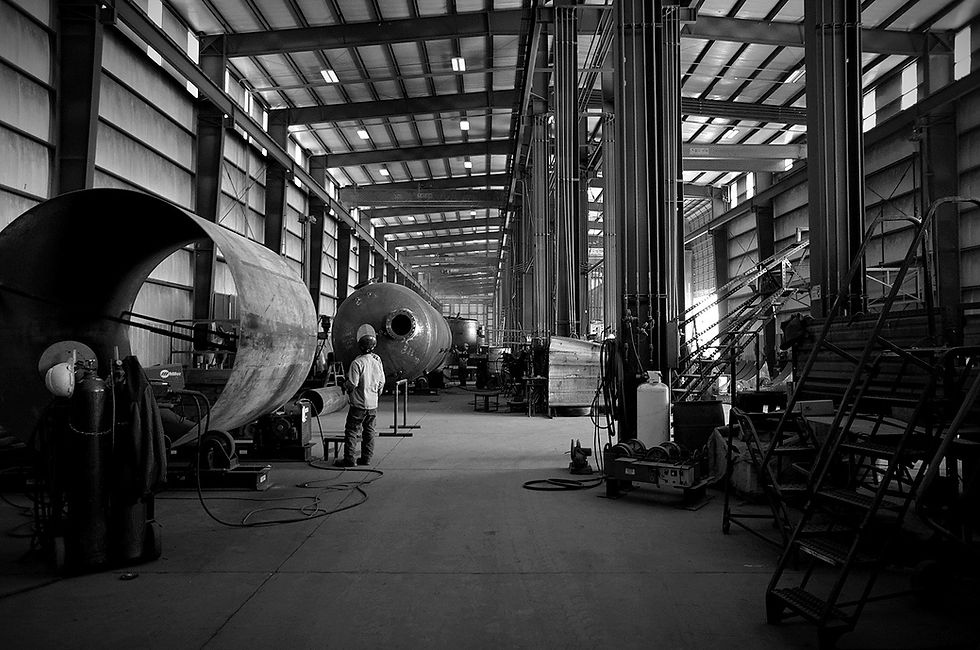
In oil and gas production, separating crude oil from water, gas, and solids is one of the most critical steps in delivering a marketable product. Among the most efficient and widely used pieces of equipment for this process are Vertical Heater Treaters. These units play a key role in improving oil quality, stabilizing production, and supporting downstream operations.
At Smith Industries, we manufacture both ASME code and non-code Vertical Heater Treaters, designed to meet a wide range of production requirements. With standard sizes ranging from 4' x 20' to 10' x 30', our equipment supports everything from smaller well sites to large-scale production facilities.
This guide breaks down how Vertical Heater Treaters work, why they matter, and how to select the right configuration for your operation.
What Are Vertical Heater Treaters
Vertical Heater Treaters are specialized vessels used in upstream oil and gas production to separate oil, water, and gas from a wellstream. Produced fluids typically arrive at the surface as emulsions, meaning oil and water are mixed together along with entrained gas and solids.
A heater treater uses a combination of heat, gravity separation, and internal components to break these emulsions and produce sale-quality crude oil.
According to research and industry documentation, heater treaters are used to:
Separate oil from produced water and sediment
Stabilize crude oil by removing volatile hydrocarbons
Reduce vapor pressure for safer storage and transport
Improve overall product quality for pipeline or sales specifications
Without properly functioning Vertical Heater Treaters, operators risk off-spec oil, higher transportation costs, and inefficient production systems.
How Vertical Heater Treaters Work
The operation of Vertical Heater Treaters relies on three primary principles: heat, gravity, and residence time.
1. Heating the Emulsion
Inside the vessel, a firetube or burner heats the incoming fluid. This heat:
Reduces oil viscosity
Breaks down the bonds between oil and water
Releases dissolved gases
2. Gravity Separation
Once heated, the fluid enters a settling zone where gravity separates the phases:
Gas rises to the top
Oil forms a middle layer
Water and solids settle at the bottom
3. Internal Components
Vertical Heater Treaters include internals such as:
Inlet spreaders
Coalescing devices
Weirs and baffles
These components improve droplet coalescence and ensure efficient separation.
Operating temperatures typically range from 160°F to 250°F, depending on crude properties and production conditions.
Why Choose Vertical Heater Treaters
When comparing equipment options, Vertical Heater Treaters offer several advantages that make them ideal for many oilfield applications.
Compact Footprint
Vertical units take up less surface area than horizontal vessels, making them ideal for:
Tight well pads
Remote locations
Sites with limited infrastructure
Efficient Gas Disengagement
The vertical design promotes natural gas separation, allowing gas to rise quickly and cleanly from the liquid phases.
Simplified Installation
Because of their compact design, Vertical Heater Treaters often require:
Less civil work
Smaller foundations
Easier transportation and placement
Cost Efficiency
In many cases, vertical configurations offer a lower total installed cost compared to horizontal units.
Vertical vs Horizontal Heater Treaters
While both configurations serve the same purpose, selecting between vertical and horizontal designs depends on your specific operating conditions.
Vertical Heater Treaters are best suited for:
Limited pad space
Moderate production rates
Simpler separation requirements
High water cut wells
Tight emulsions
Higher throughput systems
Vertical units prioritize compactness and simplicity, while horizontal units offer extended residence time for more complex separation challenges.
Sizing Vertical Heater Treaters
Choosing the correct size is critical to performance. Smith Industries manufactures Vertical Heater Treaters in standard sizes ranging from:
4' x 20'
Up to 10' x 30'
Sizing depends on several key factors:
Production Rate
Peak flow rates must be considered, not just average production. Undersized units can lead to:
Poor separation
Increased fuel consumption
Off-spec oil
Water Cut
Higher water content requires more residence time and larger vessels.
Crude Properties
Factors such as API gravity, paraffin content, and solids influence separation difficulty.
Temperature Requirements
Higher temperatures improve separation but increase fuel consumption and emissions.
The right balance between vessel size and operating temperature is essential for efficient performance.
ASME Code vs Non-Code Vertical Heater Treaters
Smith Industries offers both ASME code and non-code Vertical Heater Treaters, allowing operators to match equipment to their regulatory and operational requirements.
ASME Code Units
Built to strict engineering standards
Required for higher pressure applications
Preferred for midstream and downstream operations
Non-Code Units
Suitable for lower pressure environments
Cost-effective for certain field applications
Common in upstream production settings
The choice depends on pressure requirements, safety considerations, and regulatory compliance.
Environmental Considerations
Modern oil and gas operations place increasing emphasis on environmental performance. Vertical Heater Treaters are considered fired equipment, meaning emissions are generated from fuel combustion.
Additionally, heater treaters can produce flash gas, which is released when pressure and temperature changes occur during separation. This gas often contains methane and volatile organic compounds, making proper handling critical for compliance and efficiency.
To reduce environmental impact, operators can:
Optimize temperature settings
Maintain burners for efficient combustion
Insulate vessels to reduce heat loss
Capture flash gas using vapor recovery systems
Organizations like the Global Methane Initiative promote practices that reduce methane emissions and improve operational efficiency.
Key Components of Vertical Heater Treaters
The performance of Vertical Heater Treaters depends heavily on internal design and control systems.
Inlet Devices
Control flow entry and prevent turbulence that can re-emulsify fluids.
Coalescers
Promote droplet merging, speeding up separation.
Firetube or Heating System
Provides the heat necessary to break emulsions.
Level Controls
Maintain proper separation between oil and water layers.
Pressure Relief Systems
Protect the vessel and ensure safe operation.
Each component contributes to stable, efficient operation and reduced maintenance.
Applications of Vertical Heater Treaters
Vertical Heater Treaters are used across a wide range of oil and gas production scenarios, including:
Single well operations
Multi-well production facilities
Remote field developments
Early-stage production setups
Their versatility and compact design make them a reliable solution for both small and large operations.
Why Choose Smith Industries for Vertical Heater Treaters
Smith Industries designs and manufactures Vertical Heater Treaters built for durability, performance, and efficiency.
We offer:
ASME code and non-code options
Vertical and horizontal configurations
Standard sizes from 4' x 20' to 10' x 30'
Custom engineering based on production conditions
Our team works closely with operators to match each unit to specific field requirements, helping reduce downtime and improve product quality.
We also provide support throughout the lifecycle of your equipment, from design and fabrication to installation and maintenance.
The Bottom Line
Vertical Heater Treaters are essential to efficient oil and gas production. They improve oil quality, stabilize operations, and help meet regulatory requirements.
By selecting the right size, configuration, and operating conditions, operators can maximize efficiency while minimizing fuel consumption and emissions.
With Smith Industries, you gain access to expertly engineered Vertical Heater Treaters that deliver consistent performance across a wide range of applications.
If you are evaluating equipment for your next project, our team is ready to help you find the right solution.


Comments